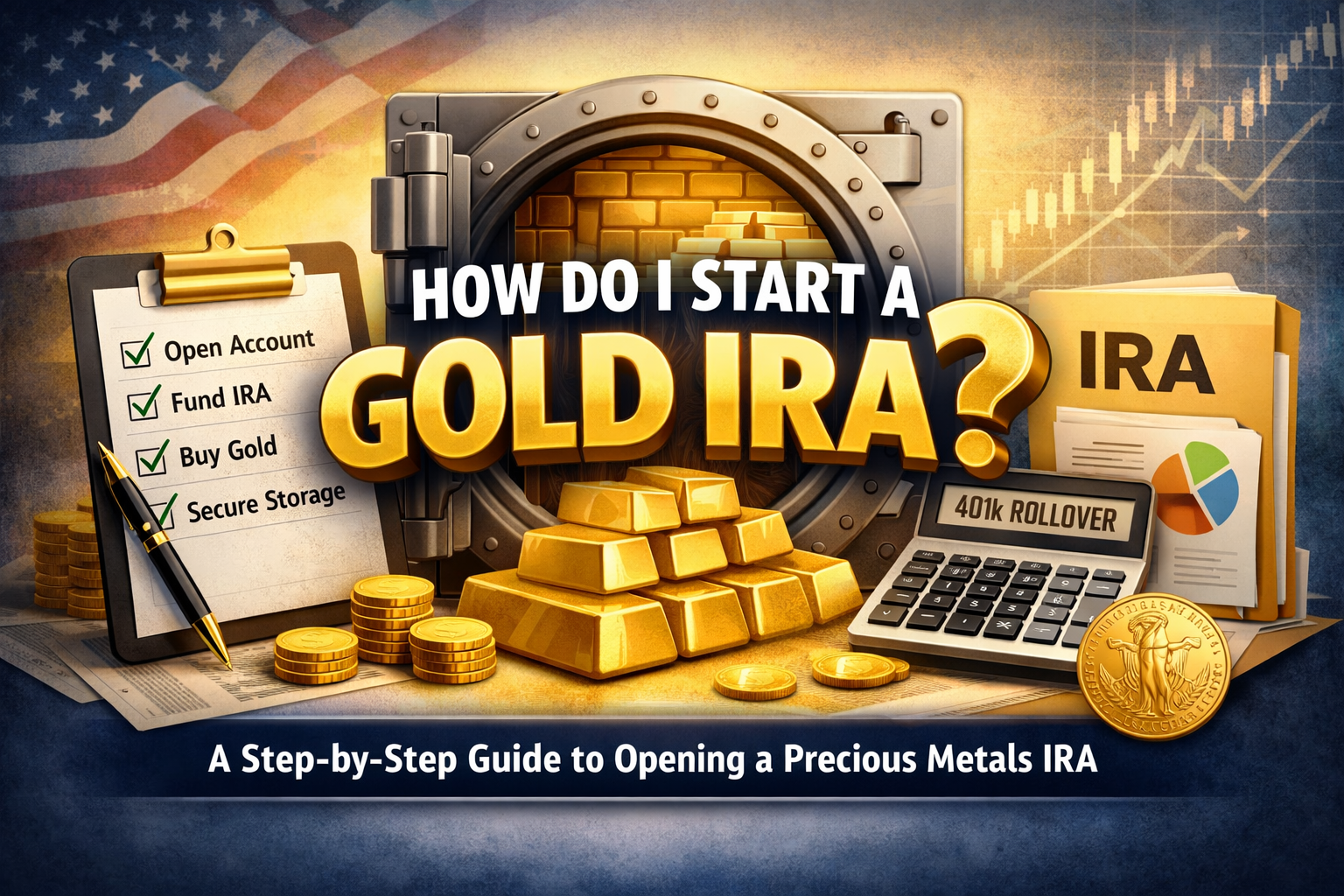

A Step-by-Step Guide to Opening a Gold IRA Without Penalties or Hidden Fees
Learn exactly how to start a gold IRA step by step, avoid IRS penalties, compare custodians, and understand fees so you can diversify your retirement safely.
To start a gold IRA, you open a self-directed IRA with a qualified custodian, fund it via transfer or rollover, choose IRS-approved metals, and store them in an approved depository. The key is staying compliant with rules from the Internal Revenue Service to avoid penalties.
Compare top-rated gold IRA providers and request a free investor kit to see current fee structures and minimums.
Many investors asking “how do I start a gold IRA?” are looking for two things:
A hedge against inflation and market volatility
A tax-advantaged way to hold tangible assets
Gold IRAs became possible after the Taxpayer Relief Act of 1997 allowed certain precious metals to be held in retirement accounts. Today, they’re commonly used by pre-retirees and high-net-worth investors who want diversification beyond stocks and bonds.
However, confusion is common because gold IRAs involve more rules, more parties, and more fees than traditional IRAs. Understanding the process helps you navigate these complexities and reduces procedural risk.
Step 1: Decide if a Gold IRA Fits Your Strategy
A gold IRA may be appropriate if you:
Want diversification outside equities
Are concerned about inflation or currency risk
Prefer tangible assets
Have at least $25k–$50k to allocate (typical minimums)
Its usually not ideal if you need liquidity or are focused on income generation.
Step 2: Choose a Self-Directed IRA Custodian
You cannot open a gold IRA at a typical brokerage. Instead, you must use a self-directed IRA custodian that handles alternative assets.
Well-known custodians include:
Equity Trust Company
STRATA Trust Company
Your custodian:
Opens and administers the account
Handles IRS reporting
Coordinates storage with a depository
Step 3: Fund the Account (Transfer or Rollover)
You can fund a gold IRA in three primary ways:
- Direct Transfer (most common)
Move funds from an existing IRA directly to the new custodian , no taxes or penalties.
- Rollover from a 401(k)
If you’ve left an employer, you can roll over funds into a gold IRA.
- New Contribution
Subject to annual contribution limits.
💡 Compliance Tip: Avoid taking possession of funds during a rollover unless you can redeposit within 60 days, or you may face taxes and penalties.
Step 4: Select IRS-Approved Metals
The IRS only allows specific bullion that meets purity standards:
Gold: 99.5% purity or higher
Silver: 99.9%
Platinum and Palladium: 99.95%
Common choices include:
American Gold Eagles
Canadian Maple Leafs
Gold bars from approved refiners
Your dealer will help you choose, but the custodian must execute the purchase.
Step 5: Store Metals in an Approved Depository
You cannot store IRA metals at home. They must be held in an approved facility such as:
Delaware Depository
Brinks Global Services
Storage options:
Segregated: Your metals stored separately
Non-segregated: Pooled with others (lower cost)
Request storage pricing from leading depositories to estimate your long-term costs.
Step 6: Monitor and Rebalance
Like any retirement asset, your gold IRA should be reviewed annually to confirm it still aligns with your goals, risk tolerance, and allocation targets.
Gold IRAs need a custodian, dealer, and depository
Transfers are safer than rollovers for avoiding penalties
Fees typically include setup, annual maintenance, and storage
Only IRS-approved bullion qualifies
Metals must stay in secure storage
Financial planners often suggest limiting precious metals to 5–15% of a diversified portfolio. Gold can act as a volatility dampener but should not replace growth assets entirely.
Reputable dealers known for investor education and transparent pricing include:
Augusta Precious Metals
Goldco
American Hartford Gold
Get a free one-on-one consultation with a specialist to see if a gold IRA fits your retirement plan.
Before opening an account, review:
IRS Publication 590 (IRA rules)
Custodian fee disclosures
Buy/sell spread details
Storage insurance coverage
You may also want to consult a CPA or fiduciary advisor to confirm tax implications based on your situation.
Starting a gold IRA is straightforward once you understand the steps: choose a qualified custodian, fund the account correctly, buy approved metals, and store them securely. The biggest risks , penalties, hidden fees, and aggressive sales tactics , can be avoided with proper due diligence.
For investors seeking diversification, inflation protection, and tangible assets within a retirement framework, a gold IRA can be a strategic addition when used thoughtfully as part of a balanced portfolio.
To start a gold IRA, begin by obtaining a free one-on-one consultation with a specialist to determine if this investment aligns with your retirement goals. Prior to opening an account, familiarize yourself with IRS Publication 590, review custodian fee disclosures, understand the buy/sell spread details, and assess storage insurance coverage. Consulting a CPA or fiduciary advisor is advisable to clarify any tax implications applicable to your financial situation. Following these steps will help ensure a well-informed approach to integrating a gold IRA into your retirement strategy.